I keep a compost heap at the bottom of my garden, tucked behind the shed where nobody has to look at it.
It is not glamorous. It is a slightly battered plastic dalek bin that the council sold me for a fiver years ago. But every spring I dig out a pile of dark, crumbly material that cost me nothing and goes straight back into the beds. That, to me, is the whole point.
If you have been putting composting off because it sounds complicated, I promise it is not. This is what I wish someone had told me at the start.
What composting actually is
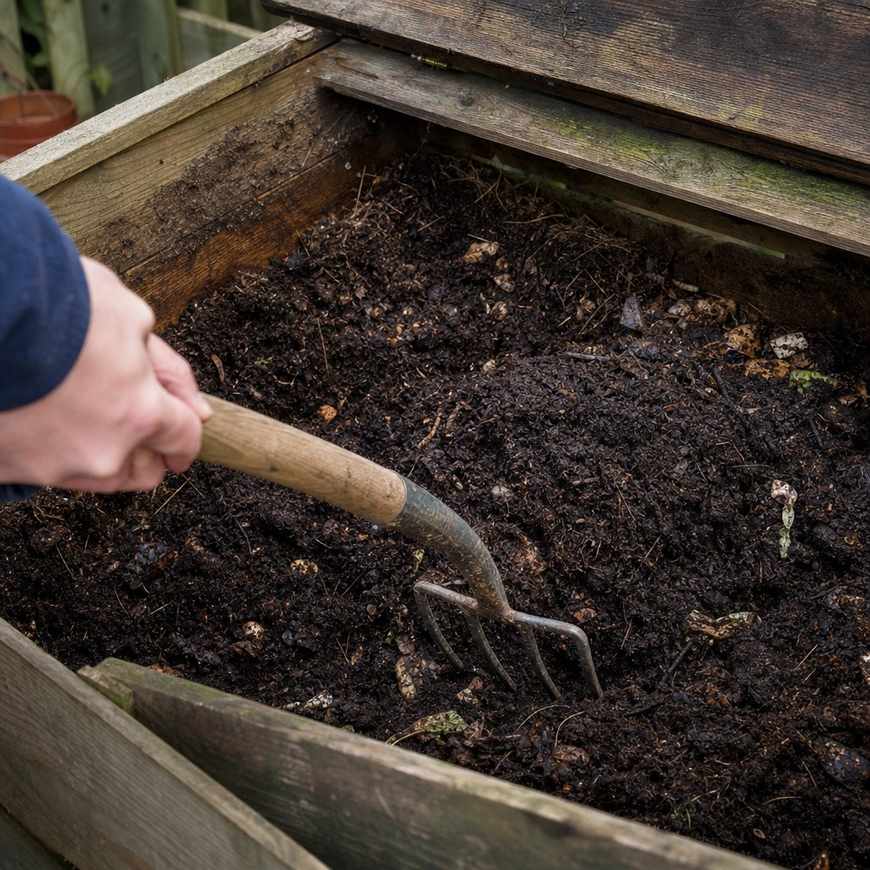
You are giving food waste and garden material somewhere to rot down slowly, helped along by worms, bacteria, and a bit of warmth.
The end product is called finished compost, and it looks and smells like good dark soil. Dig it into your beds and it feeds your plants, improves drainage, and holds moisture in dry spells. It also means less goes in the bin each week.
In the UK, many councils offer green-waste collections, which is worth using. But a home compost heap goes further: it handles your kitchen scraps too, and it puts the finished material right where you need it.
A council green-waste collection is useful. A compost bin at the bottom of the garden is better.
Greens and browns: the only rule that matters
Everything you put in falls into one of two groups.
Greens are nitrogen-rich and tend to be fresh or wet: vegetable and fruit peelings, teabags, coffee grounds, grass clippings, fresh plant trimmings.
Browns are carbon-rich and tend to be dry or woody: cardboard torn into pieces, shredded paper, dry leaves, woody stems snapped into smaller lengths, egg boxes.
You want roughly two to three parts browns to one part greens.
Too many greens and the heap goes wet and smelly. Too many browns and it dries out and stalls. It sounds fiddly at first, but you get a feel for it quickly. I keep a cardboard box near the bin for storing dry material so I always have browns on hand when I tip in a batch of kitchen peelings.
What to put in, and what to leave out
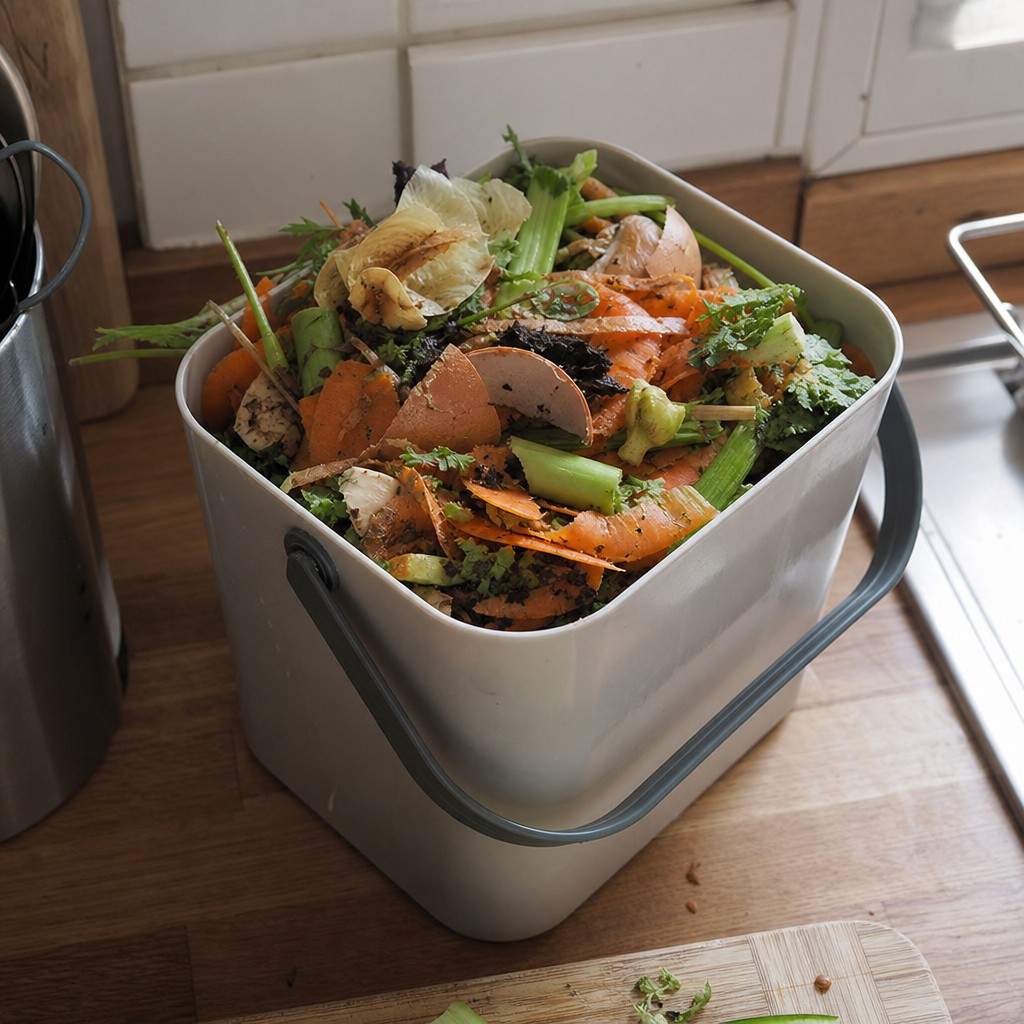
Here is what works well:
- Vegetable and fruit peelings
- Tea bags and coffee grounds
- Crushed eggshells
- Grass clippings (thinly layered, not dumped in a clump)
- Fallen leaves
- Cardboard and paper (shredded or torn)
- Small garden prunings
Leave these out:
- Cooked food, meat, fish, or dairy (they attract rats and smell badly as they break down)
- Dog or cat waste (pathogen risk)
- Diseased plant material (the heap may not get hot enough to kill it)
- Perennial weeds like bindweed or couch grass (they can survive and re-root)
- Citrus peel in large quantities (slows things down and the worms tend to avoid it)
I learned the rat lesson the hard way one autumn. Half a loaf of bread went in, and within a week I had company. Stick to raw plant matter and you will not have that problem.
Where to put your bin
Partial shade works well. Full sun dries the heap out too fast, and deep shade slows it down.
A flat bit of bare ground is ideal so worms can travel up from the soil into the heap. If you only have paving, it will still work, just takes a bit longer.
I put mine close enough to the house that I will actually use it through winter without it feeling like a trek, but far enough back that it is out of sight from the kitchen window. That balance matters more than people admit.
Avoid positioning it right against a fence or hedge where the roots of neighbouring plants might creep in and take up the nutrients before you do.
How long does it take?
In the UK, expect somewhere between six months and a year for cold composting (which is what most of us do: just keep adding and let it get on with things). If you turn the heap every week or two with a fork, you will speed that up considerably.
The signs it is ready:
- Dark brown or black in colour, not identifiable as anything you put in
- Crumbly and loose, not slimy or lumpy
- Smells earthy, like forest soil, not like rotting food
The bottom of the heap finishes first. Most dalek bins have a hatch at the base for exactly that reason. I usually dig out the bottom section in spring and leave the top portion to carry on for another season.
What to do if it goes wrong
If the heap smells bad, it is almost always too wet and too heavy on greens. Fork in a good layer of cardboard and torn newspaper, turn it if you can manage it, and leave the lid off for a day or two to let some air through.
If it has stopped doing anything and feels dry, water it gently and add some fresh grass clippings or kitchen peelings to wake the bacteria back up.
A slow or smelly heap is not a failure. It is just feedback. Adjust the balance and it will sort itself out.
Start this week
You do not need to buy anything expensive. A dalek bin from your local council is usually around five to ten pounds and does everything you need.
Start small and let it build. Add kitchen peelings as they come, tear up some cardboard when you have it, and give it a bit of a stir every couple of weeks.
By this time next year you will have a pile of free compost that your garden will thank you for. I’m still learning what mine responds to best, but the basics really are this simple.