I came to vegetable growing late, and I wish I’d started sooner.
The mistakes are cheap, the learning is quick, and that first plate of something you actually grew yourself tastes better than it has any right to.
You don’t need a big plot or specialist knowledge to start. A sunny corner, a bag of compost, and a handful of seeds will do.
Here’s what I’d tell my past self before that first season.
Pick a sunny spot first
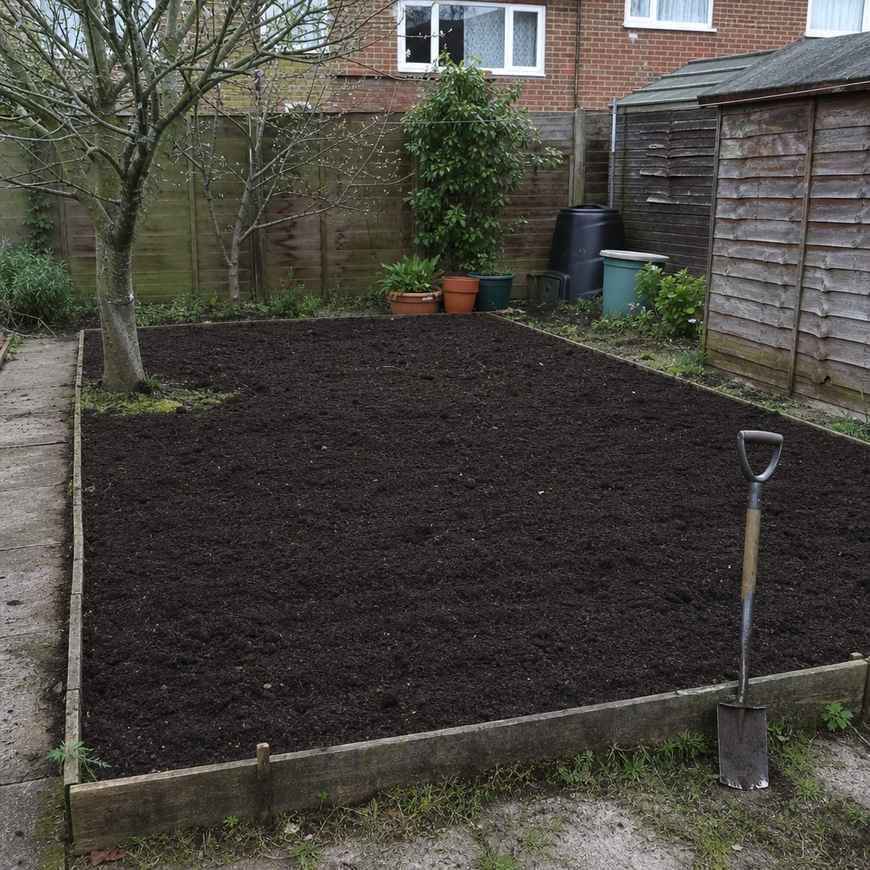
This is the single most important decision you’ll make, and you need to get it right before you spend a penny on plants.
Most vegetables need around six hours of direct sun a day. The RHS is clear on this: sun-lovers grown in too much shade produce poor harvests, and no amount of attention fixes a spot that’s fundamentally too dark.
My first patch was shadier than I realised. Things limped along and I couldn’t work out why.
Watch your garden for one day before you commit. Note where the morning light lands, which corners stay bright by afternoon, and what’s in shade by three o’clock. It takes one afternoon. It saves a whole season.
If you only have a shady garden, all is not lost. Salad leaves, herbs like mint and chives, and some brassicas tolerate lower light. But for courgettes, runner beans, and tomatoes, you need that sun.
Start with a manageable size
The most common beginner mistake is overplanting.
I did it myself. Filled every inch, then spent the summer overwhelmed by weeding, watering, and wondering what had bolted.
One raised bed, a few containers, or a single 1.5m by 2m patch is plenty for year one. You learn faster on a small plot than a big one, and you’re far more likely to enjoy it.
Start with the garden you can actually keep up with, not the one you’re planning for one day.
If you don’t have outdoor space at all, containers on a patio, balcony, or even a bright windowsill genuinely work. Lettuce in a window box, a courgette in a large pot, potatoes in a grow bag. These are real options, not consolation prizes.
Choose crops that forgive mistakes
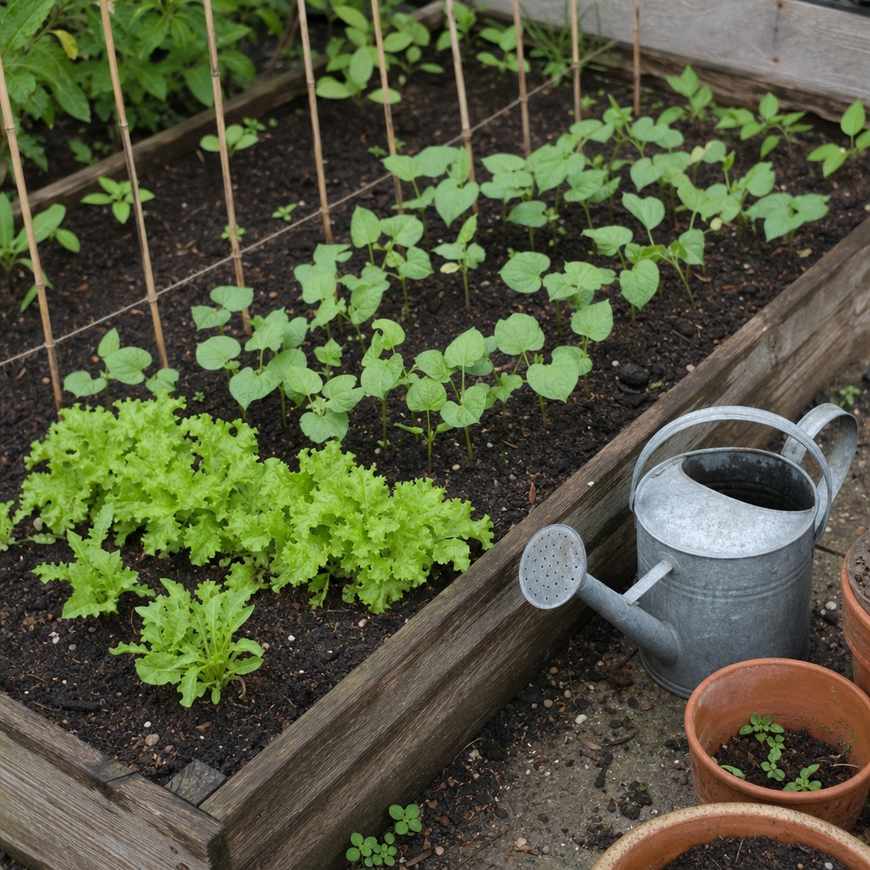
Some vegetables are much kinder to beginners than others. Stick with forgiving, fast-growing crops for your first season.
Good UK starter crops:
- Lettuce and salad leaves grow quickly from seed, tolerate cool weather, and can be harvested within six weeks. Cut-and-come-again varieties give you multiple pickings from one sowing.
- Radishes are probably the fastest thing you can grow. Sow to harvest in under a month.
- Courgettes are almost embarrassingly productive once they get going. One plant will keep you supplied all summer.
- Runner beans love a warm spot and a simple cane wigwam. Reliable, heavy-cropping, and satisfying to pick.
- Potatoes are hard to get wrong. Stick them in the ground (or a grow bag) and they mostly get on with it.
Choose crops your household actually eats. There is no point growing a glut of something nobody wants.
Prepare the soil properly
You can sow the right seeds at the right time in the wrong soil and still end up with very little.
Good soil makes everything easier. The simplest approach for a new bed:
- Clear the area of weeds and grass.
- Lay cardboard over the ground to suppress weeds.
- Add a 20 to 25cm layer of compost and well-rotted manure on top.
- Water it in, and leave it a couple of weeks before planting.
This is the no-dig method, and it genuinely works. Each year, top it up with more compost and the soil just gets better.
For containers, use a good peat-free potting compost. Worth spending a bit more here.
Plant at the right time for UK conditions
Timing matters far more than most beginners realise.
The UK does not have “spring” as a single event. It varies by year and region. A general rule:
- Cool-season crops (lettuce, radishes, peas, broad beans) go in from late March through April, or again in late summer for an autumn harvest.
- Tender crops (courgettes, runner beans, tomatoes) wait until after your last frost date, usually late May in most of England. Losing young plants to a May frost is a rite of passage. You only need to do it once.
Sow salad leaves little and often rather than one big row. A small sowing every fortnight gives a steady harvest instead of a glut.
Water well, but not constantly
Watering is an area where more is not better.
Deep, infrequent watering encourages roots down into the soil where moisture sits. A little every day keeps roots near the surface, where they struggle in a dry spell.
Aim to water thoroughly twice a week rather than a daily sprinkle. Get the water down to root level.
Water in the morning where you can. Wet foliage sitting damp overnight can invite fungal problems.
Mulching around plants with straw or wood chip holds moisture and suppresses weeds. Two jobs, one material.
Keep pests in check the simple way
You will get pests. Accept this early and it stops being dispiriting.
A few things that actually work:
- Fine mesh or fleece netting over seedlings deters cabbage white butterflies, aphids, and birds. Secure the edges.
- Copper tape around pots and beds deters slugs without chemicals.
- Marigolds nearby attract beneficial insects and help keep aphids down.
A quick walk around every few days lets you catch problems before they take hold.
A healthy plant in good soil resists pests better than a stressed one. Prevention is most of the battle.
What to do this week
You do not need to start everything at once. Just pick one thing:
- Watch where the sun falls in your garden for one day.
- Pick one small spot or a couple of containers to begin with.
- Buy a packet of salad leaves or radish seeds.
That is genuinely all you need to get started. The rest follows from there.
I’m still learning. I get things wrong every season. But I grow more food each year than I did the year before, and I enjoy it more too. Start small, plant forgiving crops, and let the first season teach you what the second one should look like.