I started growing herbs indoors because I kept buying packets of basil from the supermarket and watching them die on the windowsill within a week.
There had to be a better way.
It turned out there was, and it did not require special kit or a particularly green thumb. A decent pot, the right spot on the windowsill, and a small change to how I was watering made all the difference.
Fresh herbs indoors are genuinely achievable all year round, even through a wet British winter. Here is what I have learned.
Start with the right herbs
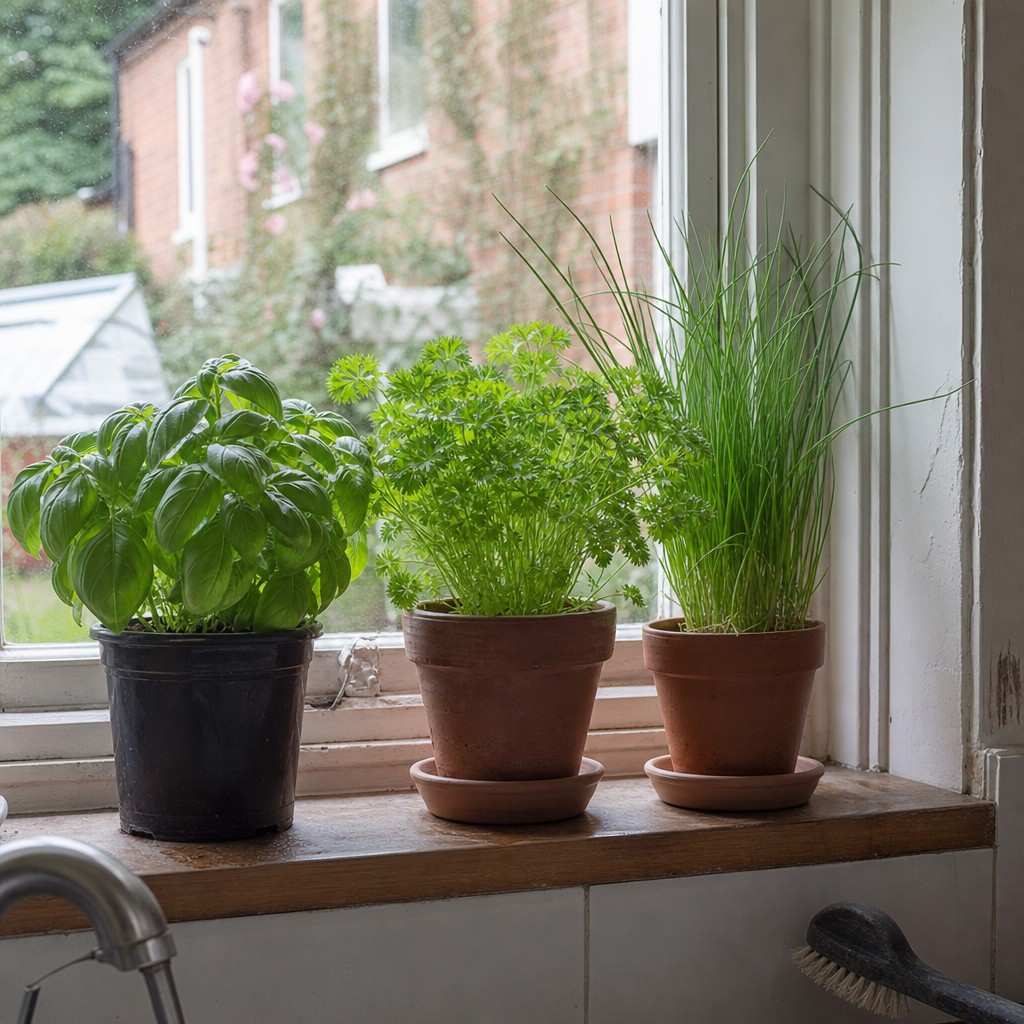
Not every herb is happy indoors. Some need big root runs or more summer heat than a UK kitchen can offer.
These four work reliably well:
- Basil loves warmth and bright light. It is the fussiest of the bunch but well worth it if your windowsill gets good sun.
- Chives are almost unkillable. They tolerate partial shade, bounce back from a missed watering, and regrow quickly after cutting.
- Mint grows enthusiastically indoors. Give it its own pot, though. Mint will crowd out everything else if you let it.
- Parsley is slow to get going, but once established it produces steadily for months.
Start with chives if you are new to this. They are the most forgiving, and early success matters.
Choose a pot with drainage holes
This is the part I got wrong first time.
I planted basil in a pretty ceramic pot with no holes and no drainage. Within a fortnight it was sitting in waterlogged compost, roots rotting quietly from below while the top still looked fine.
Every herb pot needs drainage holes. The water has to go somewhere.
A terracotta pot is a good choice. It breathes, which helps prevent the compost from staying wet too long. Plastic works fine too, so long as the holes are there.
Aim for a pot at least 15 cm deep. Herbs need room for their roots to spread.
You don’t need expensive pots. Any container with a hole in the bottom will do the job.
Use potting compost, not garden soil
Garden soil compacts in a pot and drains poorly. Potting compost is blended to stay loose, drain well, and provide the nutrients herbs need.
Pick a general-purpose potting compost from any garden centre.
Mix in a small amount of perlite or horticultural grit if you have it. This improves drainage further and is especially helpful for Mediterranean herbs like basil that dislike sitting in moisture. It is not essential, but it makes a noticeable difference.
Refresh the compost every few months. Nutrients deplete over time, and herbs growing in spent compost start to look thin and pale.
Find the brightest windowsill you have
Herbs need light. A south- or west-facing windowsill is ideal.
In the UK, even a good south-facing window loses a lot of its punch between October and February. Days get short, the sun sits low, and the light coming through glass is noticeably weaker.
This is where most indoor herb attempts fail in winter. The herbs are not dying from cold or poor compost; they are just not getting enough light.
On a bright south-facing sill, you will probably get through November without issue. By December, even that may not be enough.
The honest fix is a grow light.
A grow light makes a real difference in winter
I resisted buying one for two winters. I thought it felt overly technical.
It is not. A simple LED grow light on a timer, set to run for around 12 hours a day, keeps herbs producing right through the darkest months. The RHS notes that supplementary lighting is particularly useful for UK growers trying to maintain herbs through winter, and in my experience that is exactly right.
You do not need anything elaborate. A small clip-on grow light costs less than a few packs of supermarket herbs and pays for itself quickly.
Set it on a timer and forget about it. Six in the morning to six in the evening works well. The herbs do not need you to think about it after that.
Water when the top inch is dry
Overwatering is the most common way to kill indoor herbs.
The test is simple. Push your finger about a centimetre into the compost. If it feels damp, leave it. If it feels dry, give it a good water.
Water thoroughly when you do water. Let it run through the drainage holes, then tip away whatever collects in the saucer. Herbs sitting in standing water will rot.
In summer, that test might come up dry every couple of days. In winter, with slower growth and less evaporation, it might be once a week or less.
Follow the compost, not the calendar.
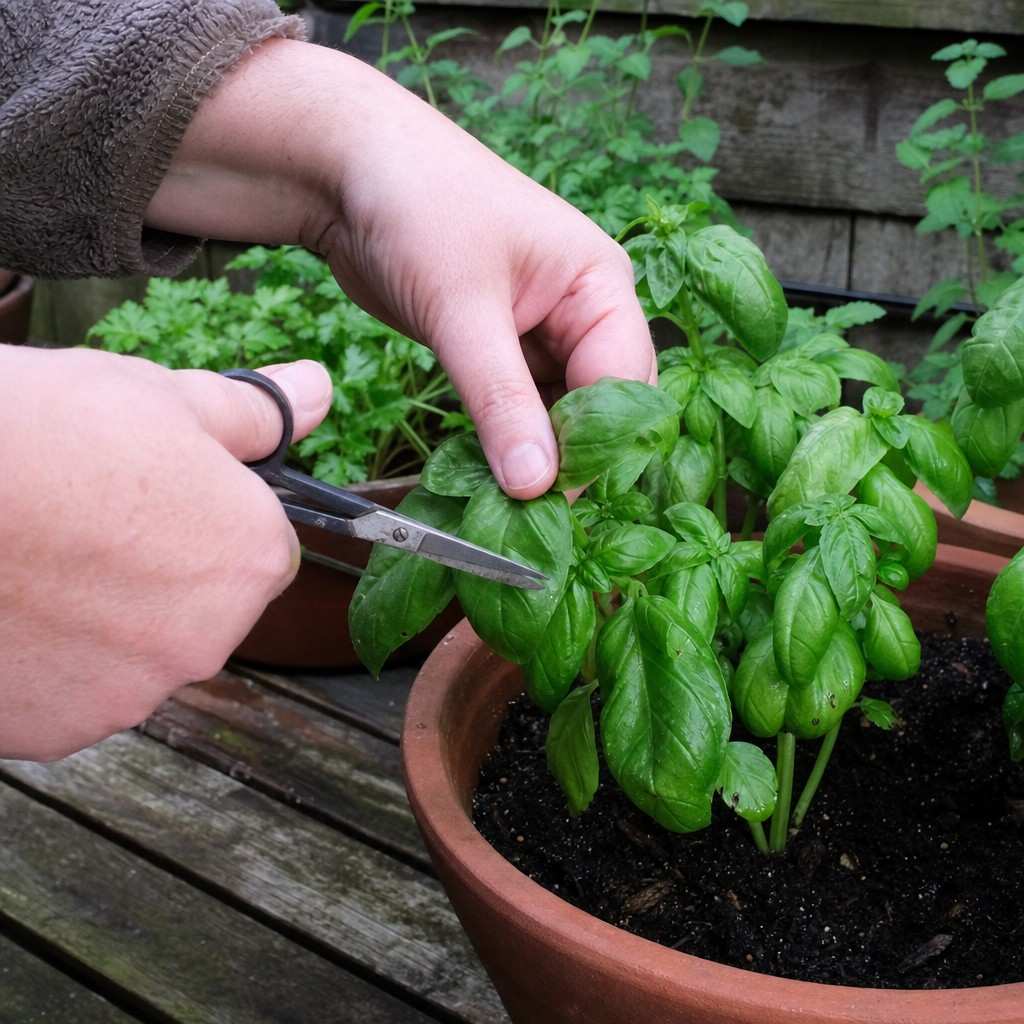
Snip regularly to keep plants bushy
This is the part that feels wrong until you try it.
Cutting from a herb plant actually encourages it to produce more. The more you harvest, the bushier and more vigorous it becomes.
Cut back to just above a leaf joint, never more than a third of the plant at once. New shoots appear from the joint below the cut, and within a week or two you have more growth than you started with.
If you let herbs go untrimmed, they get tall and straggly. Basil in particular will bolt straight to flower if left unchecked, and once it flowers the leaves turn bitter.
Snip little and often. A few stems here and there whenever you cook is exactly the right approach.
What to do this week
You do not need to buy everything at once. Start here:
- Pick one herb, chives if you are unsure.
- Find a pot with drainage holes and fill it with potting compost.
- Put it on the brightest windowsill in the house.
- Check the compost every couple of days rather than watering on a fixed schedule.
That is a working indoor herb garden. Add a grow light when winter comes and the light fades, and you will have fresh herbs all year round.
I’m still self-taught, and this is exactly how I do it. Start with one pot, see what happens, and add more when it works.