Winter is the season most houseplants quietly give up on you. Not through any drama, just a slow yellowing, a droop, and then the inevitable trip to the compost bin.
I lost a few that way before I worked out what was going wrong.
The main culprits are the same every year: too much water, not enough light, and central heating doing more damage than the cold outside ever could. Once I sorted those three things, my windowsills started surviving November to March in decent shape.
Here is what I do now.
Move plants closer to the windows
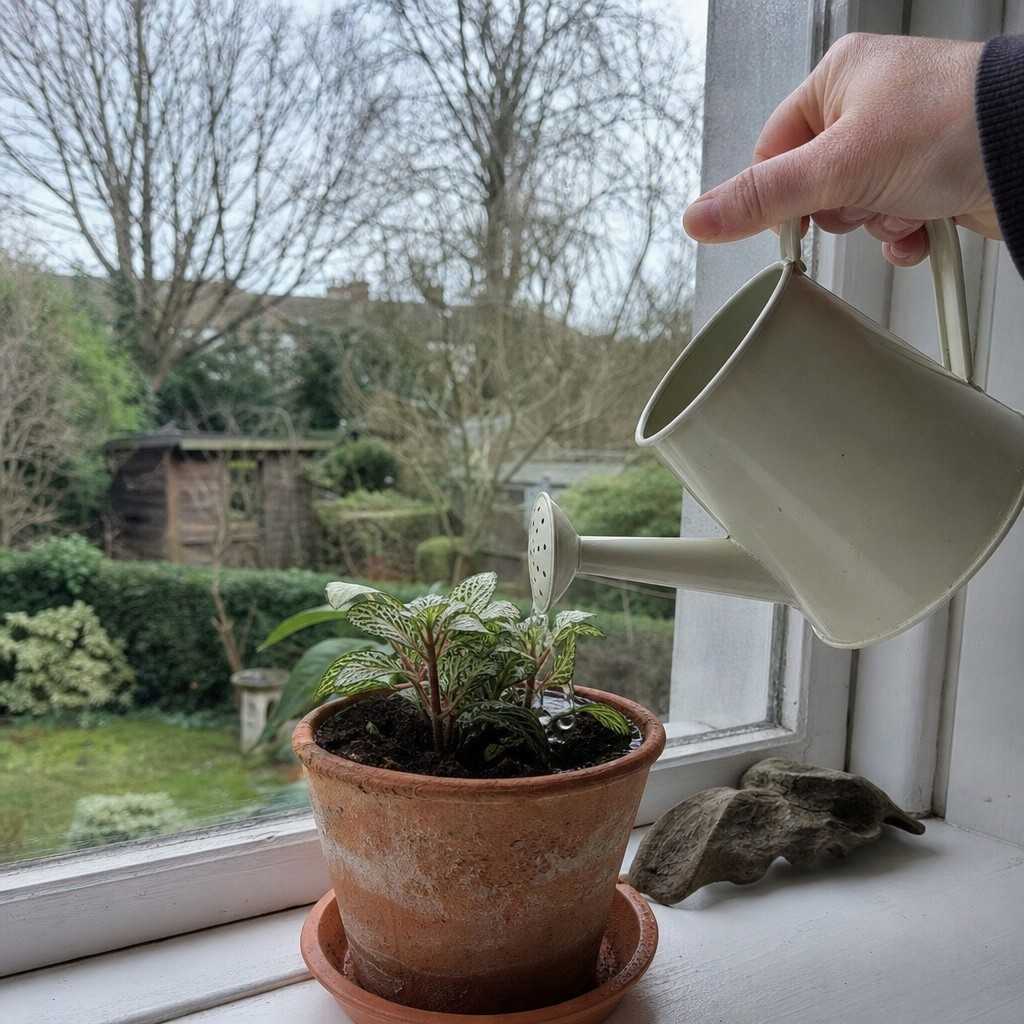
In a British winter, daylight is in short supply. We are talking five or six hours of weak sun on a good day, and grey skies for the rest.
The single most useful thing you can do is move your plants closer to the glass. South-facing windows get the most light; east or west-facing are the next best option. I shift anything that was sitting well back from the window right up to the sill by mid-October.
Clean your windows too. Grime blocks a surprising amount of light and takes two minutes to sort out.
If you have a genuinely dark corner with no natural light reaching it, a basic grow light on a timer will do the job. I run mine for about twelve hours a day and the difference is noticeable.
Water far less than you think you should
This is where most houseplants get into trouble.
In summer, plants are growing actively and drinking through the soil quickly. In winter, growth slows almost to a stop, and the soil stays damp for much longer. Keep watering at the same rate and you will rot the roots before you even notice anything is wrong.
My rule in winter is simple: push a finger an inch or two into the compost. If it still feels damp, leave it alone. Most of my houseplants go two to three weeks between waterings from November through February, sometimes longer.
The most common reason a houseplant dies in winter is kindness, too much water given too often.
If the pot is sitting in a saucer, empty it after watering. Roots left sitting in standing water are roots heading for rot.
Keep them away from radiators and cold draughts
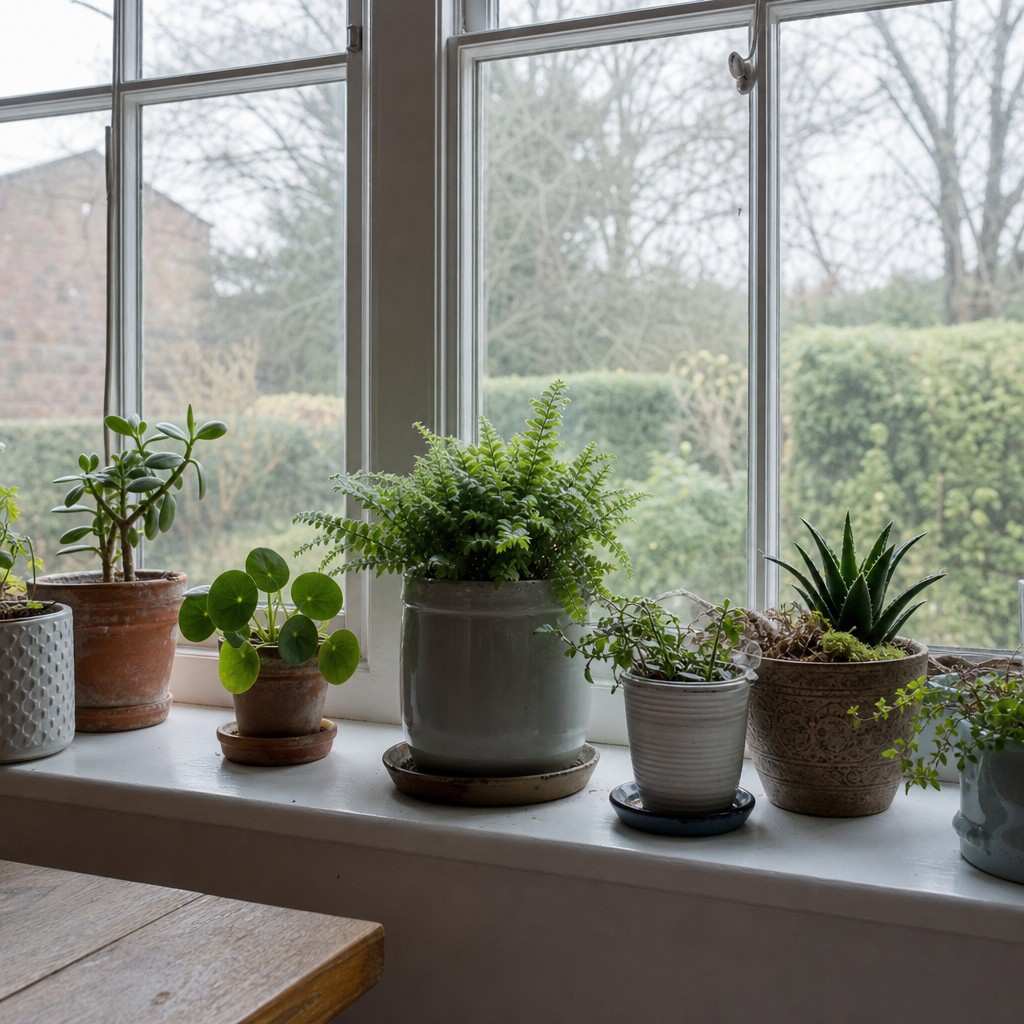
This one catches people out because the instinct is to put plants near a heat source when it gets cold.
Radiators are the enemy. The blast of dry heat shrivels leaves, crisps the edges brown, and dries the compost so fast it pulls away from the pot sides. Keep plants at least a foot or two away from any heat source.
Cold draughts are just as bad. A gap under a window frame or a front door that lets in a rush of cold air every time it opens will stress most houseplants badly. Check where the draughts are in your house and move anything vulnerable away from those spots.
Most common houseplants are comfortable in the range of 15 to 20 degrees Celsius. What they cannot cope with is swinging between cold and overheated several times a day.
Sort out the humidity
Central heating dries the air significantly, and most houseplants prefer something more humid than a heated British sitting room in January.
You do not need to spend money to fix this:
- Group plants together. As they breathe, they create a slightly more humid microclimate between them.
- Use a pebble tray. A shallow dish or tray filled with pebbles and topped up with water, with the pot sitting above the waterline, adds a steady stream of gentle evaporation.
- Move moisture-loving plants to the kitchen or bathroom where the air is naturally more humid.
Kitchens and bathrooms also often stay slightly warmer overnight, which suits tropical houseplants well.
Stop feeding until spring
Plants rest in winter. They are not growing much, they are not hungry, and they do not need fertiliser.
Feeding in winter pushes out weak, leggy growth that the plant cannot sustain in low light. It also causes a build-up of salts in the compost over time, which can damage roots.
I put the fertiliser away in October and do not bring it back out until I see proper new growth returning in March or April. Wait for longer days and genuine new shoots before you start again.
Clean the leaves
It is a small job but it makes a real difference in winter when light is precious.
Dust settles on leaves through autumn and winter, and a thick coating can block a meaningful amount of the light available. A soft damp cloth run over the leaves every few weeks keeps them absorbing as much light as possible.
Use lukewarm water and a gentle touch. For plants like peace lily or rubber plant with broad, flat leaves, this also gives you a chance to check for any early signs of pests.
Keep an eye out for pests
Warm, dry indoor air in winter creates good conditions for spider mites and mealybugs.
Check under the leaves when you do your regular wipe-down. Spider mites leave fine webbing; mealybugs look like small tufts of white fluff, usually in the leaf joints. Catching them early is much easier than dealing with a full infestation.
If you find something, isolate the plant immediately so it cannot spread to its neighbours. A rinse under a lukewarm shower often deals with early-stage spider mites. For anything more persistent, insecticidal soap is straightforward to use and widely available.
Pick plants that actually cope with low light
If you are buying houseplants for winter, or you have a genuinely dark room, choose varieties suited to it.
Snake plant, ZZ plant, and pothos handle dim conditions without complaint. Peace lily does well in low light and will often flower even through winter. Cast iron plant lives up to its name.
These are also forgiving about watering, which makes them good choices if you are still getting the hang of the winter routine. A plant that suits the conditions it is growing in will always do better than a sun-lover struggling in a north-facing hallway.
The goal in winter is not to keep your plants thriving, it is to get them through in reasonable shape. Scale back the water, move them closer to the light, and protect them from the radiator. That is genuinely all it takes.