I grew my first tomatoes in a single pot on a concrete doorstep.
No raised bed, no allotment, no sprawling vegetable patch. Just a large plastic pot, a bag of compost, and a plant from the garden centre that cost less than a coffee. That summer I picked more tomatoes than I knew what to do with.
Container gardening suits almost anyone. You don’t need a garden. You don’t need to own your home. A balcony, a patio, a sunny step, or even a windowsill is enough to begin.
Who is this for?
Lots of people assume gardening is only for those with proper gardens. It isn’t.
If you rent, you can’t dig up someone else’s lawn. If you live in a flat, you may have a balcony and nothing else. If your outdoor space is a narrow yard or a shared path, containers are how you make it work.
Growing in pots is also cheaper and less commitment than a plot. You can start with two or three containers and nothing else. No tools to buy, no beds to dig.
Choosing pots: bigger is nearly always better
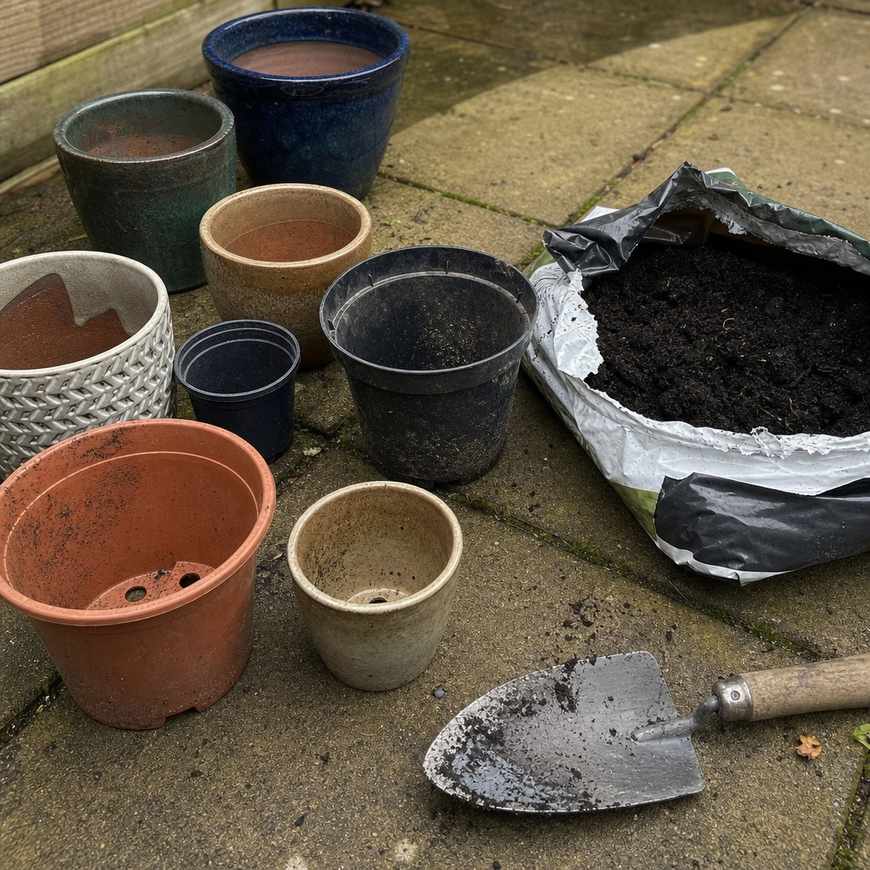
Any container that holds compost and has holes in the bottom will do. Old colanders, wooden crates, supermarket buckets, terracotta pots bought at a car boot sale. It genuinely doesn’t need to be fancy.
Size matters more than you’d think, though.
Larger pots hold more moisture, which means they dry out more slowly. A small pot in a warm spell can go from damp to bone-dry in a single afternoon. I lost more plants to small containers than to anything else in my first year.
A few rough guides:
- Herbs: a 15-20cm pot works well for a single plant; a window box for several together
- Salad leaves and dwarf beans: 25-30cm wide and at least as deep
- Tomatoes and strawberries: 30-40cm pots at minimum; bigger if you can manage it
- Anything with deep roots (like beetroot or carrots): go tall as well as wide
And the one non-negotiable: drainage holes in the base. Without them, roots sit in water and rot. Every time.
Compost: peat-free multipurpose does the job
Most beginners overthink this.
You want a peat-free multipurpose compost for containers. That’s it. It’s widely available in any garden centre or DIY shop, usually inexpensive, and it’s right for nearly every plant on this list.
Start with peat-free multipurpose. It costs a few pounds, it works, and you can refine from there once you’ve actually grown something.
Avoid using soil from the garden. It compacts badly in pots, drains poorly, and tends to bring in pests. Bagged compost is the better start.
What grows well in containers?
Quite a lot, as it turns out. Here are the ones I’d start with:
Herbs are the easiest entry point. Basil, parsley, chives, mint and coriander all grow happily in a pot. Keep mint in its own container though, it’ll take over anything it shares.
Salad leaves are possibly the most satisfying beginner crop. Sow a pinch of seeds, thin them out once they’re up, and start cutting a few weeks later. They grow back. A window box of mixed leaves will keep you in salad all summer.
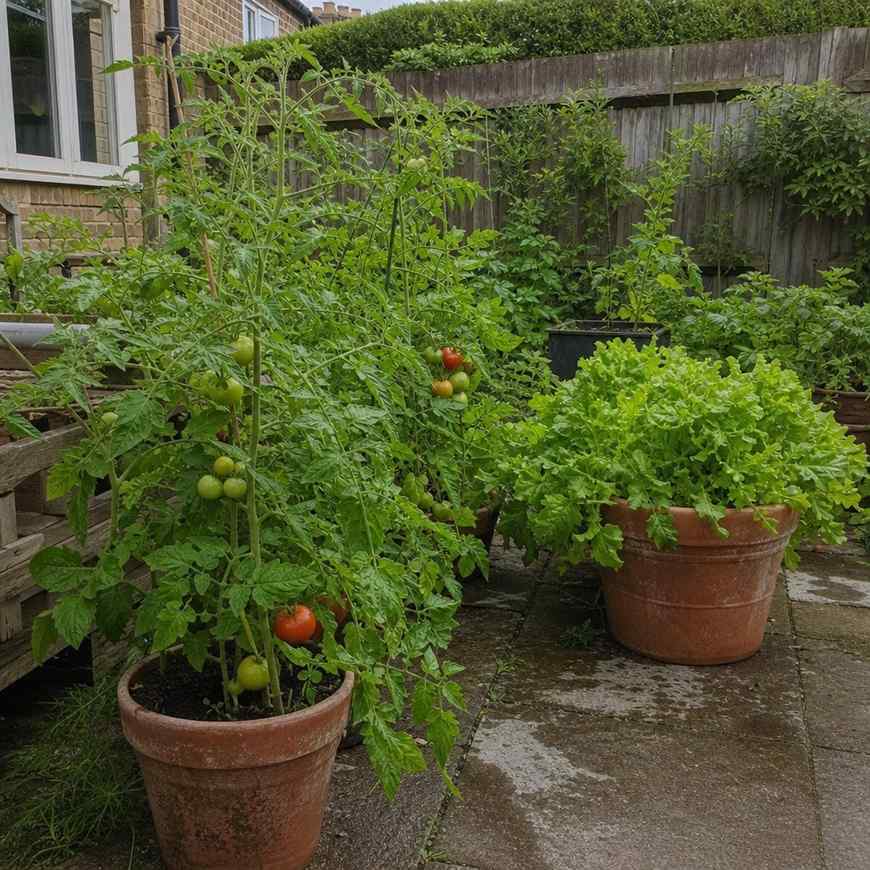
Tomatoes take a bit more attention but reward it generously. A cordon variety (one main stem, pinch out the side shoots) in a big pot on a sunny patio is one of the most productive things you can grow at home. Cherry types are the most forgiving.
Strawberries are made for containers. They send out runners, they’re perennial, and small children will harvest them before you get a chance. Worth it anyway.
Dwarf or climbing beans (French beans are a good choice) do well in a deep pot and crop reliably with minimal fuss.
Flowers are worth including even on a food-growing list. Marigolds, nasturtiums, and sweet peas all grow easily in containers and attract the insects that help your food crops along.
Watering: the one thing you must stay on top of
Pots dry out fast. This is the main reason container plants die, and I say that from experience.
In the ground, roots search for water. In a pot, there’s nowhere to go. In warm or windy weather, you may need to water once a day. In a cool, cloudy British spring, every few days is usually enough.
Stick your finger an inch into the compost. If it’s dry at that depth, water it. If it still feels damp, leave it.
The best thing you can do is check your pots every morning. It takes thirty seconds and it’s the whole job, really.
Feeding: pots run out of nutrients
Compost comes with nutrients already in it, but those run out. After six to eight weeks, a container plant is relying on you to top things up.
A liquid feed once a week through summer is enough for most crops. Tomato feed works well for anything that flowers or fruits. General liquid plant food works for leaves and herbs.
Don’t feed in winter or early spring when growth has slowed. You’ll waste the feed and potentially do more harm than good.
Sun: check your spot before you plant
Most fruiting plants, including tomatoes, strawberries and beans, want around six hours of direct sun a day. The Royal Horticultural Society is clear on this: sun-lovers don’t thrive in shade, and no amount of feeding or watering fixes a genuinely dark spot.
Before you pot anything up, watch where the sun falls on your balcony or patio for a day. Some spots are in full sun all afternoon. Some barely get any.
Salad leaves and most herbs cope with a bit more shade than fruiting crops. If your space is south-facing, almost anything on this list will do well.
Moving pots and overwintering
One of the best things about containers is that you can move them. If a cold snap is forecast, bring tender plants indoors or into a porch. If summer gets properly hot, shift pots somewhere shadier in the afternoon.
Hardy herbs like chives, mint, and parsley can stay outside through a British winter. Basil won’t. Bring it in before the first cold snap.
Strawberry plants overwinter fine outdoors in a sheltered spot. They die back and come again in spring.
Terracotta pots can crack in hard frost. Either empty them in autumn or wrap them with hessian or old fleece.
Start this week
You don’t need much to begin. Start with the garden you have time for, not the one you see in magazines.
Three pots, a bag of compost, and one easy crop is a proper start. If it goes wrong, you’ve lost a couple of quid and learned something. If it goes right, you’ll be back next spring with twice as many pots.
That’s how most of us end up here.