I grew a vegetable garden last summer. And it was work. Proper work.
Digging, watering, weeding, checking, fussing. I enjoyed it, but I am also honest enough to admit it takes time and energy that not everyone has. If that sounds like you, this post is for you.
You deserve something lovely outside too. And you can have it without the vegetable-garden level of effort.
The honest starting point
Gardening should be relaxing. The moment it starts to feel like a chore you resent, you have gone too far.
That is not failure. That is just information. Scale back, simplify, and let the garden ask less of you.
The best low-effort garden is one matched honestly to the time you actually have, not the time you hope you might have on a good week.
Start with the garden you have time for, not the one you see in magazines.
Choose perennials over annuals
This is the single biggest lever for cutting effort.
Annuals, things like petunias, marigolds, most bedding plants, live for one season. You plant them, enjoy them, and then you have to do it all over again next year.
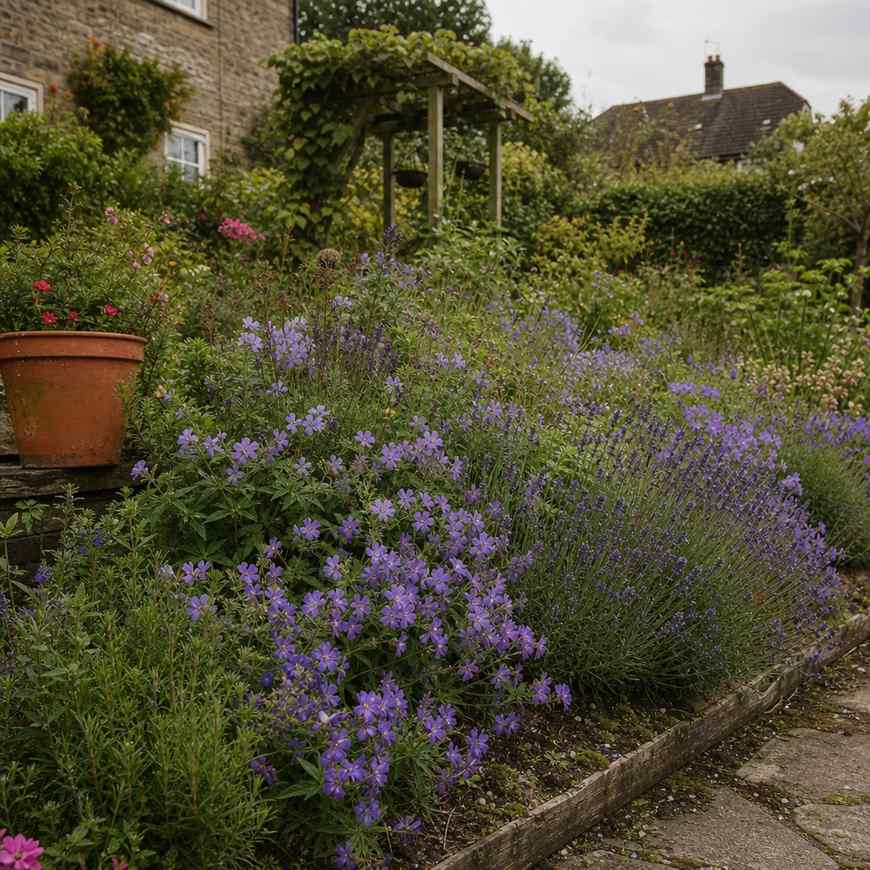
Perennials come back on their own. Plants like lavender, hardy geraniums, rudbeckia, and echinacea will return year after year with almost nothing asked of them. You plant them once and they do the rest.
The Royal Horticultural Society regularly lists hardy geraniums and lavender among the easiest low-maintenance perennials for UK gardens, and that matches my own experience entirely.
A garden planted with perennials might look bare in the first year. Give it a second year and it fills in. Give it a third and you will wonder why anyone bothers with annuals at all.
Mulch is your best friend
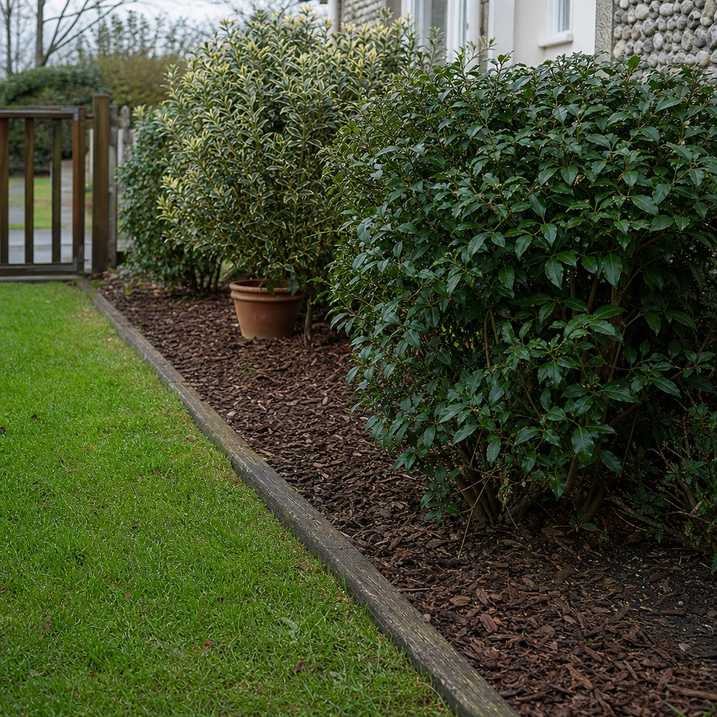
If there is one thing that genuinely earns the word “low-effort”, it is a thick layer of mulch.
Lay 5 to 7 centimetres of bark chippings or composted bark over your beds and you will:
- Suppress the majority of weeds before they get going
- Keep moisture in the soil so watering is less urgent
- Feed the soil slowly as it breaks down over time
You do not need to dig anything. Lay it straight on top of the soil, around your plants, in spring. Top it up once a year.
I did this to a small border in my garden and the weeding time dropped to almost nothing. A few things push through, but nothing like before.
Ground cover instead of bare soil
Bare soil is an invitation to weeds. Ground cover plants close that gap.
Good choices for the UK that spread to cover ground and largely look after themselves:
- Vinca minor (periwinkle) grows well in shade and is almost impossible to kill
- Ajuga (bugle) spreads quickly and has pretty purple flower spikes in spring
- Epimedium copes with dry shade, which is one of the hardest spots in any garden
Plant them, water them in, and step back. They do not ask much once they are settled.
Sensible watering
Daily watering is one of the things that puts people off gardening, and the good news is that most ornamental garden plants in the UK do not need it.
Our climate does a fair bit of the work.
What does help is watering deeply and less often rather than a quick splash every day. A good soak once or twice a week in dry spells encourages roots to go down into the soil rather than sitting near the surface. Deeper roots mean a plant that copes better when you forget.
A few pots near the door will need more attention than a planted bed, so if you want true low-maintenance, keep containers to a minimum or choose large ones that dry out more slowly.
Pick forgiving plants
Some plants are genuinely easygoing. They shrug off a missed week, cope with whatever the British weather throws at them, and come back looking fine.
A handful I keep coming back to:
- Sedum (now often sold as Hylotelephium) flowers in late summer and the birds love it
- Alliums go in as bulbs in autumn and reward you with almost nothing asked of them
- Ferns for shady spots, they thrive on neglect
I’m self-taught, so everything here is what actually worked in my own garden. These are plants I would genuinely hand to a beginner.
The real principle
If it stops being relaxing, scale it back.
That is not a gardening tip. It is the whole philosophy.
A low-maintenance garden is not a specific plant list or a particular design. It is a garden sized and planted to fit your life as it actually is. Start smaller than you think you need to. Let it grow with your confidence and your available time.
Choose forgiving plants so a setback is cheap and never feels like failure.
And if a bed gets away from you one spring and fills with weeds, you have not failed at gardening. You have just found out that bed needs more mulch. Fix it once, and move on.