I’m going to say something that took me a long time to accept.
You will never have a completely weed-free garden. Not now, not next year, not ever. The sooner you make your peace with that, the more you’ll enjoy being outside.
They are just plants that want to grow where you don’t want them. That’s all.
Once I stopped treating them as an enemy to defeat and started treating them as something to stay on top of, the whole thing got a lot calmer.
Annual weeds and perennial weeds: know which you’re dealing with
Not all weeds are the same, and it really does matter.
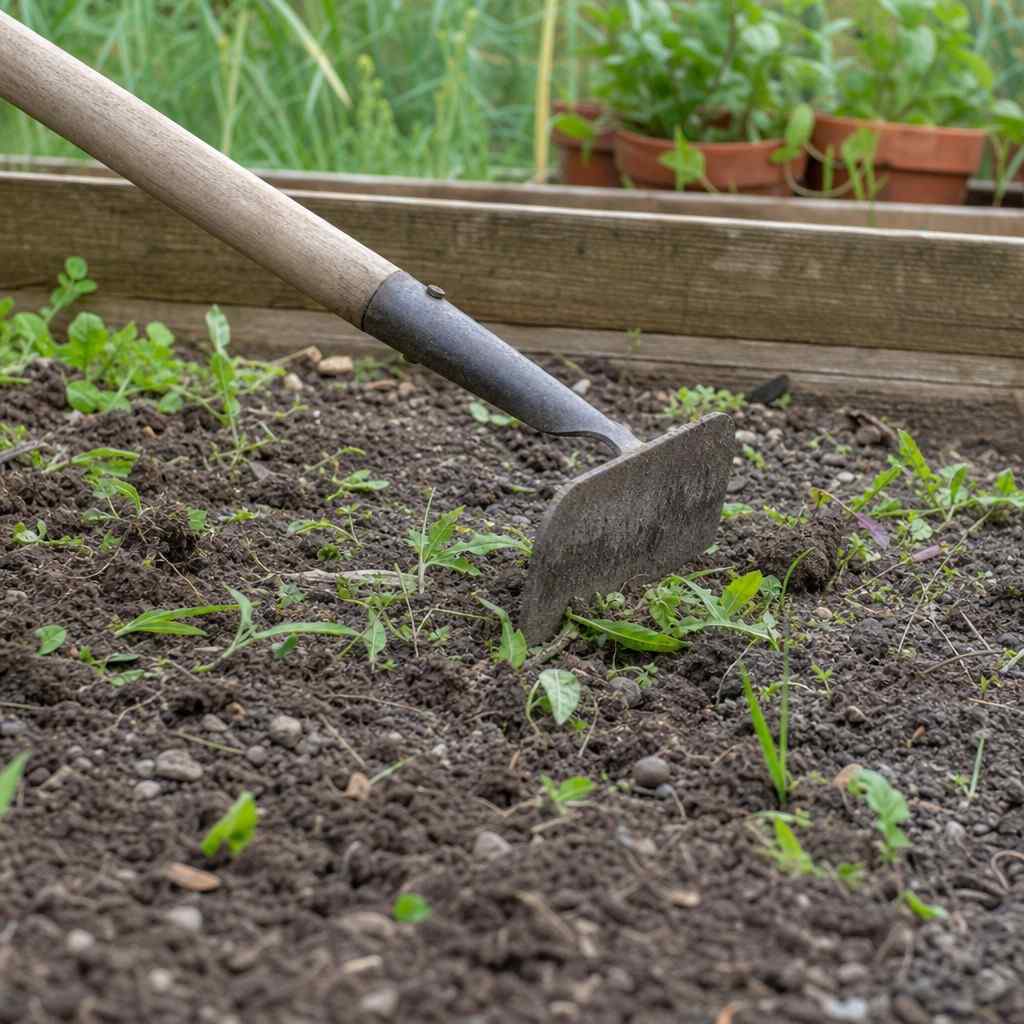
Annual weeds like groundsel, chickweed, and hairy bittercress sprout, set seed, and die in a single season. They are easy to deal with. Hoe them off before they flower and they’re gone. They have shallow roots and don’t put up a fight.
Perennial weeds are a different story. These are the ones with deep, persistent root systems that come back year after year. The ones most UK gardeners know by name:
- Bindweed wraps itself around everything and snaps off at the stem if you pull carelessly, leaving the roots behind to regrow.
- Dandelion has a taproot that can go down 30 cm or more. Snap the top off and the root stays put.
- Couch grass spreads underground through a network of white roots. Dig out one section and leave a piece behind; it starts again.
Knowing which you’re dealing with tells you how to tackle it. An annual you can hoe. A perennial you have to dig.
The two best times to weed
Here’s what I’ve learned by doing it wrong repeatedly.
Weed on damp soil after rain. Roots slip out cleanly, even deep ones. Trying to pull a dandelion from dry summer soil is a battle you won’t win.
Hoe in dry weather. Run a hoe across annual weeds on a hot afternoon, leave the severed seedlings on the surface, and they wilt and die before tea. Hoe them in when it’s wet and some will simply re-root.
Little and often beats a big blitz every time. Twenty minutes a week is easier on your back and your patience than a three-hour weekend session you dread.
How to dig out perennial weeds
For bindweed, dandelion, and couch grass, the method is the same.
Use a hand fork or a border fork, not just your fingers. Get the whole root out. With dandelions, push the fork in beside the root and lever rather than pulling from the top. With couch grass, follow the white rhizomes through the soil and ease them out in sections.
You won’t get every last piece. That’s fine. Keep at it each time you’re in the garden and you’ll gradually exhaust the plant. A bit of root left behind means it comes back thinner. A bit of root you keep finding and removing means it eventually gives up.
Don’t put perennial weed roots in your compost bin. Into the bin bag they go.
Mulch is your best prevention
A layer of mulch over bare soil is the most underrated thing a beginner can do.
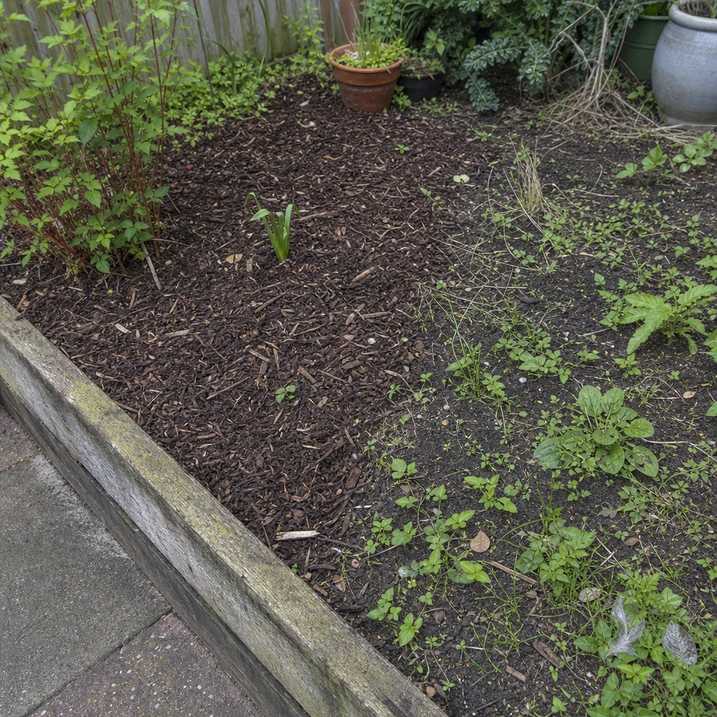
Spread bark chips, well-rotted compost, or even a thick layer of cardboard across any bare ground and you block the light that weed seeds need to germinate. They’re still there in the soil; they just can’t get going.
A 5 to 8 cm layer is the sweet spot. Thin enough that it doesn’t bury your existing plants. Thick enough that most seedlings can’t push through it.
I did this to a scruffy corner of my garden last spring. By summer it was tidy and almost weed-free with no work at all.
Don’t let them set seed
There is an old saying: “one year’s seeds, seven years’ weeds.”
It’s an exaggeration, but not by much. Weed seeds stay dormant in the soil for years, waiting for the right conditions. Remove weeds before they flower and you break the cycle.
Even if you can’t dig something out right now, snipping the flower heads off buys you time.
Some weeds are worth leaving alone
I want to say a word in defence of a few weeds.
Dandelions are brilliant for pollinators early in the season, before most garden flowers are open. Nettles are food for the caterpillars of red admirals and tortoiseshells. A small, untidy corner you leave alone can quietly earn its keep.
You don’t have to be ruthless everywhere. A relaxed patch at the back of the garden, away from paths and beds, costs you nothing and gives insects somewhere to be.
What about weedkiller?
I rarely use it, and for most garden weeds it isn’t necessary.
The exception I’d make is a serious bindweed or Japanese knotweed infestation in a large area, where digging alone could take years. A systemic weedkiller that travels to the root makes sense there. Use it carefully and keep it away from anything you want to keep.
For most beginners with a small garden or a few beds, the physical methods are enough. They’re free, they’re immediate, and they work.
Start this week
You don’t need anything new to begin.
- Take a look at your weeds. Identify what’s annual and what’s perennial.
- After the next rain, spend 20 minutes hand-weeding the perennials while the ground is soft.
- On a dry day, hoe across any annual seedlings you can see.
That’s enough to start. A small patch of garden you stay on top of is more satisfying than a large one you fight.
I’m still learning too, and the weeds are still there. But I enjoy the garden far more now that I’ve stopped expecting otherwise.