People look at a small garden and see the problem. I’ve come to see the opposite.
Less ground to dig. Cheaper to fill with plants. Faster to tidy on a Sunday afternoon. If you’re starting out with a modest plot, a paved yard, or even just a patio, you are in a better position than you probably think.
The real mistake is trying to cram in too much because the space feels small. Start with a few clear intentions, and a small garden becomes a pleasure rather than a puzzle.
Think in zones, not in beds
This was the shift that helped me most when I started.
Rather than planting randomly and hoping it came together, I thought of my space as having three small zones:
- A seating corner with room for a chair and a pot or two.
- A productive patch of a few containers growing something I can eat or use.
- A green backdrop of something low-maintenance that fills the wall or fence.
That’s it. Three zones. You don’t need all three at once.
Even a yard of four metres by three can hold all of this if you stop thinking in flower beds and start thinking in layers. Vertical surfaces count. Containers count. A pot on a step counts.
A small space gives you permission to be deliberate. You choose what goes in and what doesn’t.
Go vertical before going wide
This is where small gardens win.
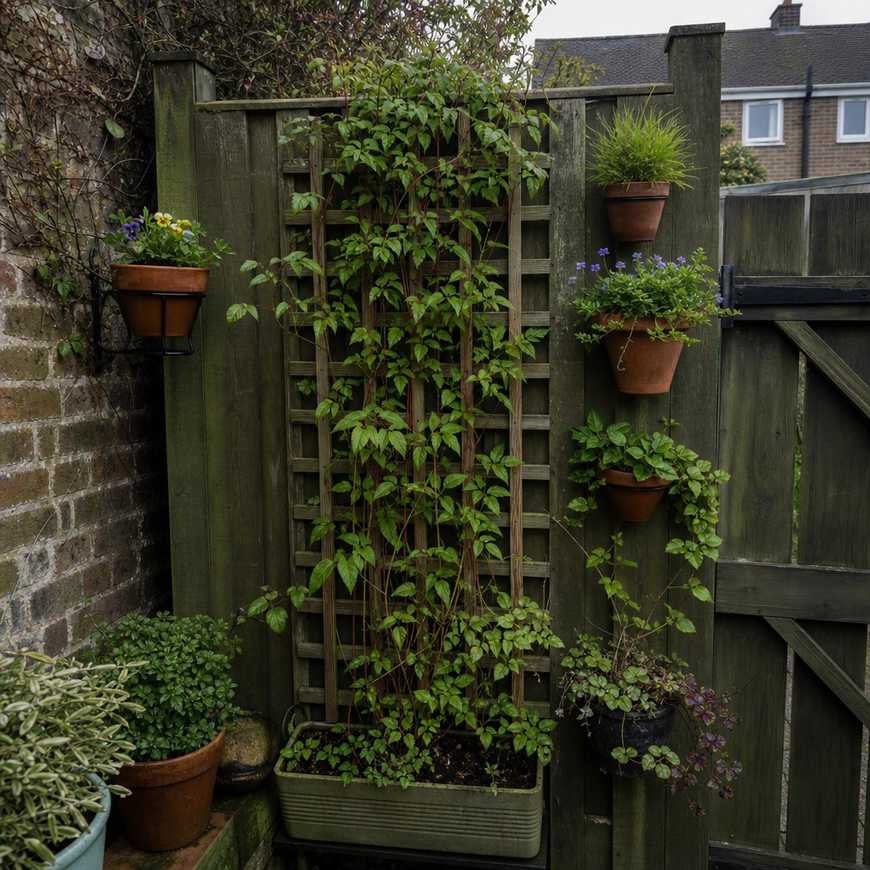
A fence, a wall, a trellis propped against the back of the house: these are growing surfaces most people walk past without using. I strung a trellis along my back fence and planted a climbing rose and some sweet peas. Within a season, the whole fence was covered.
Some options worth knowing about:
- Wall-mounted planters hold herbs beautifully and keep the ground free.
- Climbing plants like clematis or runner beans cover a lot of surface cheaply.
- A trellis panel, bought flat-packed, costs a few pounds and takes an afternoon to put up.
Don’t buy the most expensive climber to start with. A bag of runner bean seeds does the same job, gives you something to eat, and costs less than a pound.
Containers are the beginner’s best friend
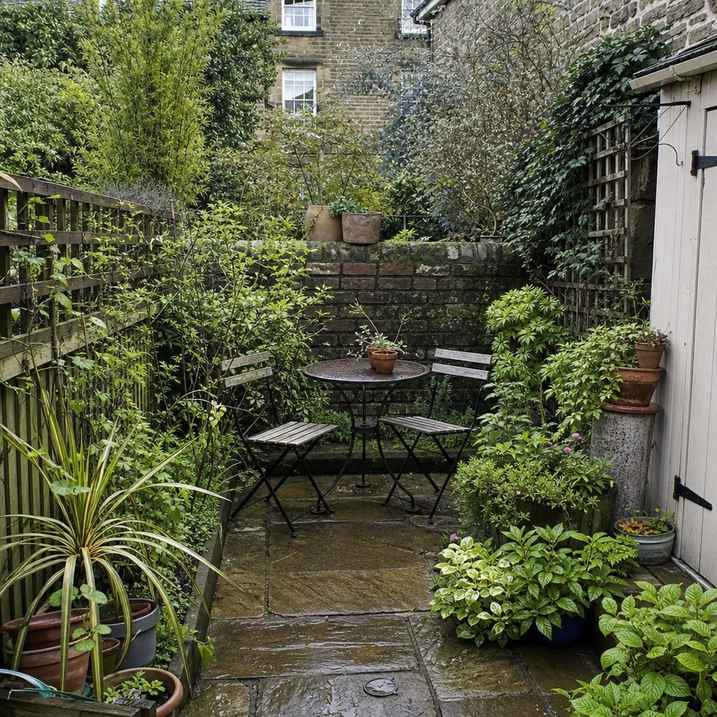
If your outdoor space is mostly paved, containers are not a compromise. They are how you garden.
The big advantage of pots is that you control everything: the compost, the drainage, the position. Move them if a spot turns out to be shadier than you thought.
I started with two large terracotta pots, a couple of plastic ones from the garden centre, and a wooden crate I lined with a bin bag. Not matching, not expensive. It worked.
A few things I’ve learned about containers:
- Bigger is almost always better. Small pots dry out fast and need watering every day in summer.
- Drainage matters. If a pot doesn’t have holes, drill some or use it as an outer sleeve with a plain plastic pot inside.
If you want to grow food, a single large container of mixed salad leaves is hard to beat. Cut the leaves and they grow back. You can be eating from it within six weeks of sowing.
Choose plants that earn their space
Small gardens have no room for a plant that only does one thing for two weeks a year.
Look for compact varieties or plants that give you more than one season of interest. Dwarf lavender is a good example: flowers in summer, stays tidy the rest of the year, and the bees appreciate it.
Solid choices for a beginner with limited space:
- Herbs in a cluster of pots. Mint, chives, and parsley are forgiving, useful in the kitchen, and compact enough for a windowsill.
- Dwarf or patio varieties (patio tomatoes, dwarf courgettes) are bred for containers and small plots.
- Evergreens in large pots give you year-round greenery without replanting.
A compact plant chosen with intention beats a big one that overwhelms everything around it.
A sense of depth without digging up the paving
One thing that surprises people about small paved gardens is how much difference levels make.
You don’t need raised beds (though they help). Even placing pots at different heights, using a simple plant stand, or stacking a few bricks to lift a container can change the whole feel of a space. The eye moves around rather than landing flat on a single level.
I used an old wooden step ladder as a plant stand for a season. Three shelves of herbs and trailing plants at different heights. It cost nothing and people always asked about it.
A taller element at the back also creates a sense of enclosure. A wigwam of bamboo canes with climbing beans does the job for very little money.
Keep it low-maintenance so it stays a pleasure
The only gardens that fail are the ones that stop being enjoyable.
A small space that’s overfilled and hard to manage is less rewarding than a simple one you can keep on top of in twenty minutes a week. I’m self-taught, and one of the things I got wrong early on was buying more plants than I had time for.
One pass a week is enough to keep a small, well-planned garden looking good. Water the containers, pull any obvious weeds, deadhead any spent flowers. That’s the whole job most weeks.
Choose plants that don’t need constant fussing. Drought-tolerant herbs, established shrubs, and hardy perennials are far more forgiving than something exotic that wants precise conditions.
You don’t need a big plot or much money to have an outside space worth sitting in. A few clear choices and a bit of vertical thinking will take you most of the way there.